Presentation at the East Africa Communication Association Conference

EACA 2026: CAMRED research team explores disability representation on YouTube in Kenya: negotiating stereotypes and counter-narratives. Research presented at the 16th East African Communication Association Annual Conference examines digital self-representation, agency, and disability stereotypes.

Who gets to tell the disability story? Kenyan YouTubers are rewriting the narrative

The CAMRED research team examining disability representation on YouTube in Kenya presented its work at the 16th East African Communication Association (EACA) Annual Conference, held at St Paul’s University, Limuru, from 26 to 28 August 2026. The conference theme was “Reimagining Communication in Africa: AI, Media Innovation and Global Collaboration.”

The study, “Disability Representation on YouTube in Kenya: Negotiating Stereotypes and Counter-Narratives,” explores how creators with disabilities use digital platforms to tell their own stories and challenge familiar media portrayals that position persons with disabilities as helpless victims or as extraordinary “superheroes.”
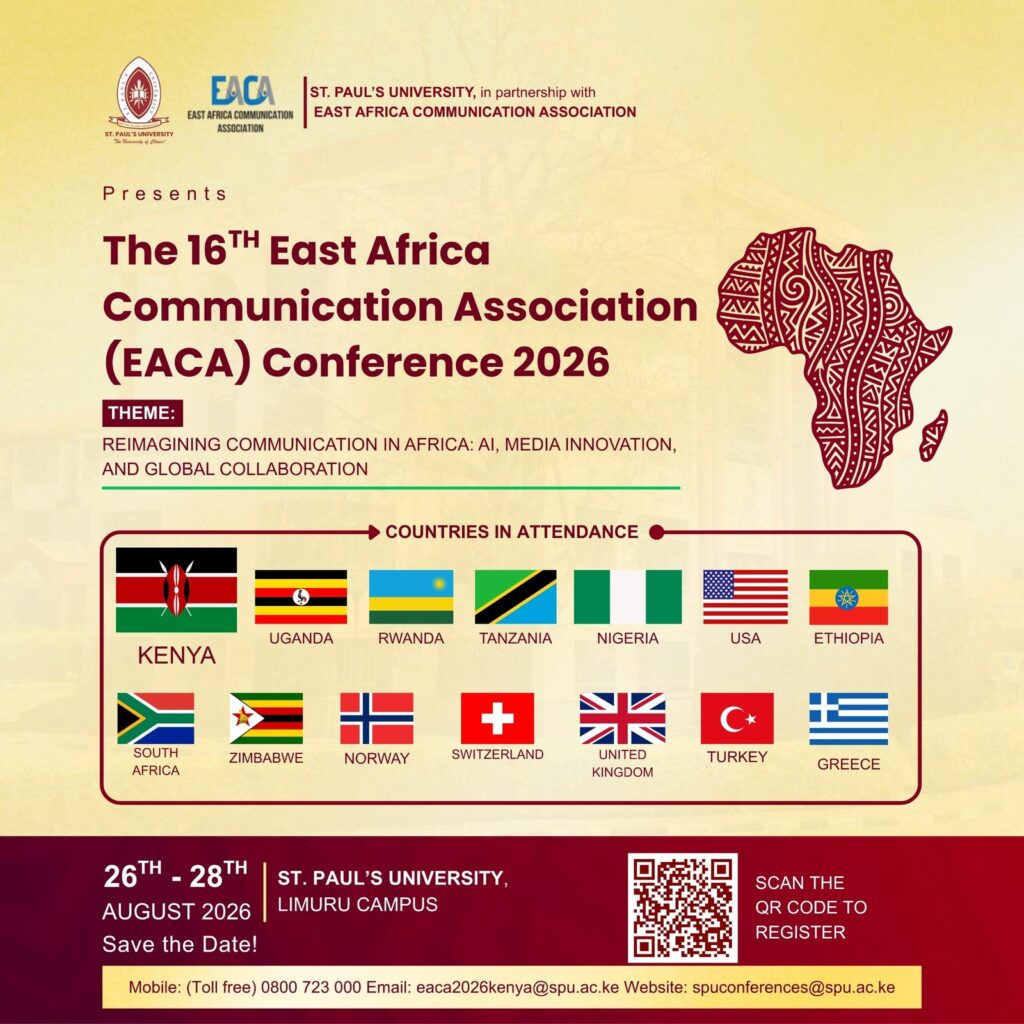
Poster for the 16th East Africa Communication Association Conference 2026 at St Paul’s University, Limuru
The 16th EACA Annual Conference 2026, hosted by St Paul’s University in partnership with EACA

Looking beyond traditional media narratives

With smartphones, cameras, and internet access, creators can publish content without depending entirely on traditional media gatekeepers. YouTube offers opportunities for persons with disabilities to decide what to share, how to frame their experiences, and which parts of their identities to foreground. The research asks how this creator-led storytelling constructs disability and negotiates established stereotypes.

The study used a comparative qualitative approach, examining 12 publicly available videos: three from each of four Kenyan YouTube channels. The cases were Brian Muchiri, Eve Kibare (Blind Girl Experience), Julio Supercharge, and Sammy Brayo. Their content spans personal vlogs, relationships, dance, travel, car culture, music, and art.

Three insights from the study

1. Creators reclaim narrative authority

In institutionally produced stories, journalists and editors often determine which aspects of a person’s experience are shown. On YouTube, creators can become the hosts and interpreters of their own stories. Brian Muchiri, for example, speaks about his wheelchair when he chooses, while also sharing stories about marriage and travel. This shift from being spoken about to doing the speaking is an important expression of agency.

2. Agency does not require doing everything alone

The research challenges the idea that independence means never receiving assistance. Brian’s travel experiences and Eve Kibare’s participation in dance classes show that support and collaboration can coexist with personal decision-making. The key question is whether the creator retains control over their actions and how those experiences are represented.

3. Everyday achievement should not become a “superhero” story

The study cautions against treating every achievement by persons with disabilities as exceptional simply because of disability. Julio’s car reviews and Safari Rally experience, and Sammy Brayo’s music and art, can be understood as expressions of expertise, interests, and creativity, not only as inspirational feats.

What the 12 videos revealed

The analysis identified incapability themes in 4 of the 12 videos and victimisation themes in 2. Dehumanisation was not identified in the sample. Supercrip representation appeared across all 12 videos, although its intensity varied: it was strongest in Sammy Brayo’s videos and weakest in those featuring Brian Muchiri and Eve Kibare.

The creators’ identities were also intersectional. The videos presented them through interests and roles such as education, farming, friendship, marriage, filmmaking, communication work, dance, music, art, travel, and car enthusiasm. Disability was salient, but rarely stood alone as an identity.

Research presented at EACA 2026

The conference programme lists the paper under John Ndavula in Day One, Parallel Session 1F, Session 2, scheduled for 15:00 to 16:00 on Wednesday, 26 August 2026 (printed programme, page 19).
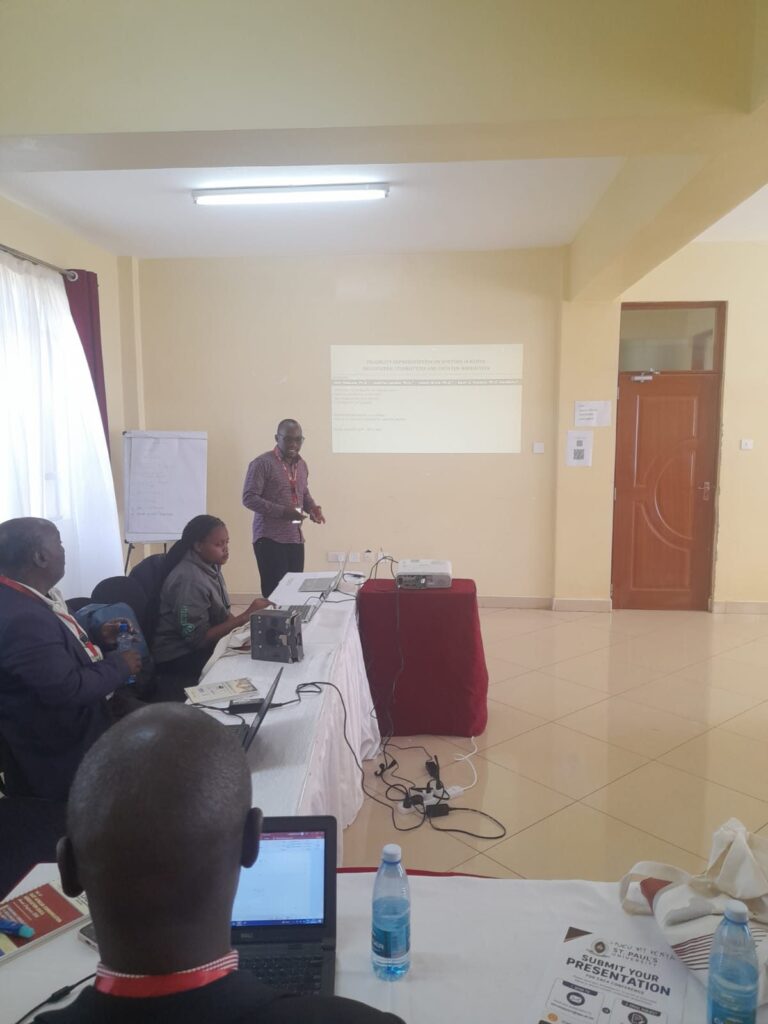
Kevin A. Nayema presenting CAMRED research on disability representation on YouTube in Kenya at EACA 2026
Kevin A. Nayema presenting the research during the EACA 2026 conference

A contribution to inclusive communication

The research contributes to wider discussions about digital media, inclusion, and who has the power to shape public narratives. It also recognises that creator control does not automatically guarantee inclusive representation: platform conventions, audience expectations, cultural narratives, and resource constraints can continue to shape what creators produce.

The study’s central argument is that inclusive self-representation is not simply about positive imagery or the absence of stereotypes. It involves narrative authority, interdependent agency, intersectionality, and the contextualised representation of disability.

Ultimately, the question of who gets to tell the disability story is also a question of power and ownership. The creators examined in this study demonstrate how digital spaces can enable persons with disabilities to move beyond being the subjects of other people’s stories and become active authors of their own.

About the research team

  • Catalin Brylla (PhD) - Bournemouth University
  • John Ndavula (PhD) - Murang’a University of Technology
  • Jackline Lidubwi (PhD) - Africa Nazarene University
  • Kevin A. Nayema - University of Nairobi
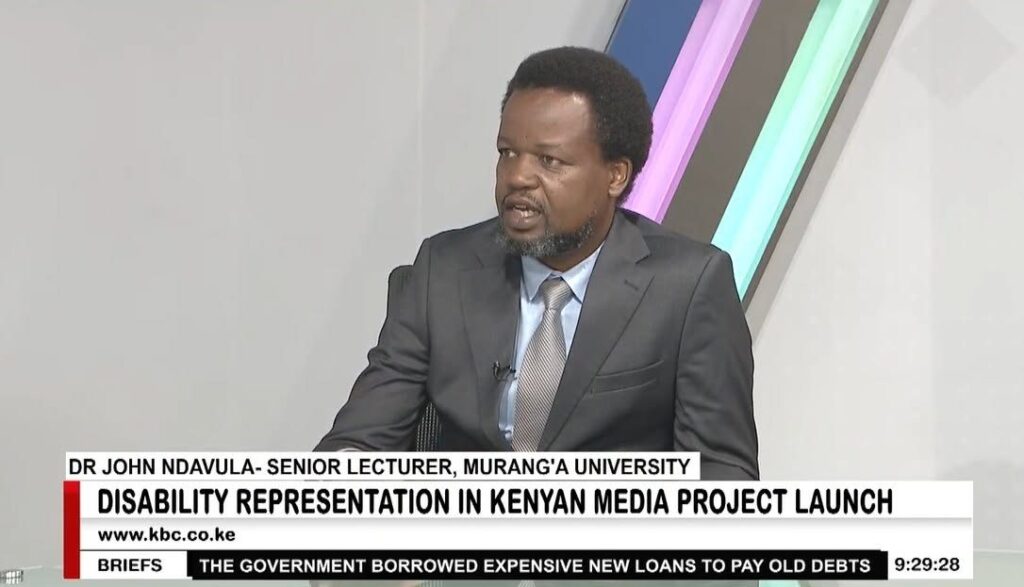
KBC Prime Edition Interview with Dr John Ndavula

Calls for inclusive disability representation in media during CAMRED launch

Dr John Ndavula, a Senior Lecturer at Murang’a University of Technology (MUT), has called on Kenyan media organisations to rethink how they portray People with Disabilities, emphasising the need for respectful language, diverse storytelling, and greater inclusion in media production.

Speaking during an interview on Kenya Broadcasting Corporation’s (KBC’s) television Prime Edition on 7 April 2026, Dr Ndavula observed that People with Disabilities remain underrepresented in Kenyan media despite being an important part of society.

The media is a mirror of society. If we do not see People with Disabilities represented in the media, yet they are part of our society, then there is a disconnect between what we see in the media and the reality on the ground.

Dr John Ndavula

KBC Prime Edition broadcast still of Dr John Ndavula discussing disability representation in Kenyan media
Dr John Ndavula speaking on KBC Prime Edition about disability representation in Kenyan media

The interview followed a roundtable discussion that brought together researchers, journalists, disability advocates, and media practitioners as part of the launch activities for the Changing Attitudes through Media Representations of Disability (CAMRED) research project.

The project brings together Murang’a University of Technology, African Nazarene University, and Bournemouth University in the United Kingdom, alongside media organisations and disability advocacy groups. Among the participating organisations are the Kenya Broadcasting Corporation (KBC), Signs TV, and the Action Network for the Disabled (ANDY).

Changing how disability stories are told

Dr Ndavula noted that disability coverage in Kenyan media has frequently relied on narratives that portray People with Disabilities as objects of pity or charity rather than as active members of society.

He explained that such portrayals can reinforce stereotypes and contribute to the continued marginalisation of People with Disabilities.

The CAMRED project seeks to address these challenges by bringing together researchers, media practitioners, and disability advocates to develop practical approaches to disability representation.

A key planned output of the project is a media reporting toolkit that will guide journalists and content producers on appropriate terminology, story framing, and inclusive reporting practices.

The toolkit will be co-created with media professionals, researchers, and organisations of People with Disabilities to ensure that it responds to the practical needs of newsrooms.

Language matters in disability reporting

One of the key issues discussed during the interview was the language journalists use when referring to People with Disabilities.

Dr Ndavula encouraged journalists to adopt people-first language and avoid expressions that reinforce negative stereotypes.

For example, he advised journalists to use the term “wheelchair user” rather than “wheelchair-bound”, explaining that the latter wrongly portrays a wheelchair as a restriction rather than a mobility aid.

He also encouraged media practitioners to use the term “People with Disabilities” instead of expressions such as “people living with disabilities” or “differently abled”.

First of all, you have to look at people first.

Dr John Ndavula

He further urged journalists to develop stories that reflect the different roles People with Disabilities play in society, including as professionals, political leaders, entrepreneurs, and community members.

From research to practical solutions

Dr Ndavula explained that the CAMRED project provides an opportunity to translate academic research into practical interventions that can improve media reporting.

Through collaboration with journalists, media producers, and disability advocates, the research team intends to identify effective approaches to disability representation and incorporate them into newsroom practices.

He noted that while existing legislation, including the Persons with Disabilities Act, 2025, provides a framework for inclusion, journalists also require practical guidance on implementing inclusive reporting.

The project therefore seeks to bridge the gap between research, policy, and everyday media production.

Inclusive journalism training

During the interview, Dr Ndavula highlighted Murang’a University of Technology’s contribution to inclusive journalism through its journalism training programme.

He explained that the University offers a fourth-year unit in Disability Reporting, which combines classroom learning with practical projects.

Students are introduced to disability reporting concepts, interact with guest speakers, and undertake media production assignments that allow them to apply inclusive reporting principles.

According to Dr Ndavula, graduates who have undertaken this training are already contributing to disability-related journalism in Kenyan media houses, with some working as disability reporters and others developing programmes focusing on disability issues.

He emphasised that integrating disability reporting into university curricula is an important step towards preparing journalists who can report on disability accurately and respectfully.

Recommendations for Kenyan newsrooms

Concluding the interview, Dr Ndavula outlined three immediate actions media organisations can take to improve disability representation.

  1. Journalists should use accurate and respectful language that does not perpetuate stereotypes or stigma.
  2. Newsrooms should explore diverse story angles that portray People with Disabilities beyond the conventional narratives of vulnerability, dependence, and charity.
  3. Media organisations should strengthen collaboration with organisations of People with Disabilities and involve individuals with disabilities directly in developing and telling their stories.

He emphasised that meaningful inclusion requires moving beyond occasional disability-focused coverage to making disability representation part of routine media practice. The year-long CAMRED project hopes to improve how disability is represented in the media in Kenya.